Context Engineering vs Prompt Engineering: The Skill Every QA Engineer Must Learn Before 2027

QABash Media
Jun 4, 2026
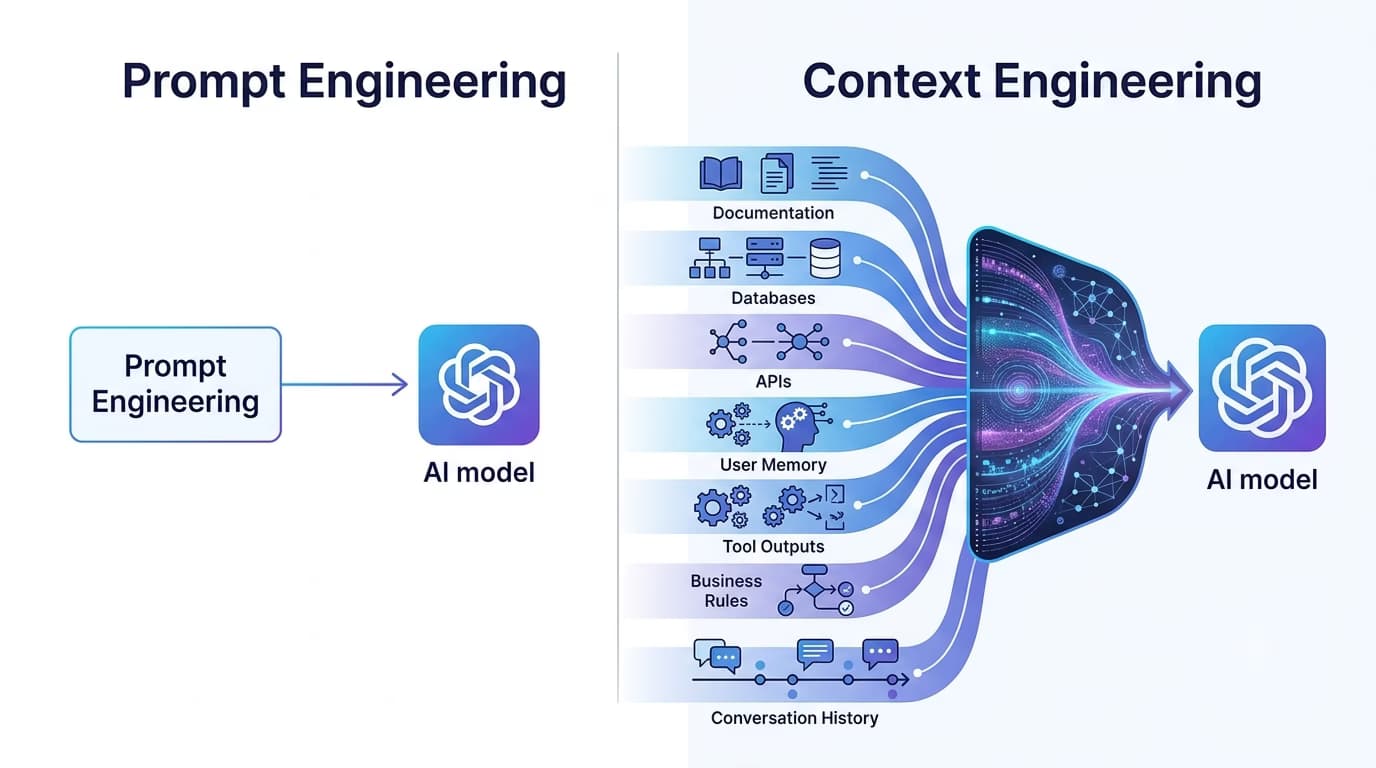
For almost three years, prompt engineering dominated every AI conversation.
Courses appeared overnight.
Job descriptions demanded it.
Social media influencers claimed that learning a few prompt tricks could dramatically increase your salary.
Then something interesting happened.
The best AI products stopped competing on prompts.
They started competing on context.
Today, the biggest difference between a mediocre AI application and an exceptional one is rarely the prompt itself.
The difference is what the model knows before it generates an answer.
That shift has a name:
Context Engineering.
And for software testers, automation engineers, SDETs, and quality engineers, it may become one of the most important skills of the next decade.
Quick Answer
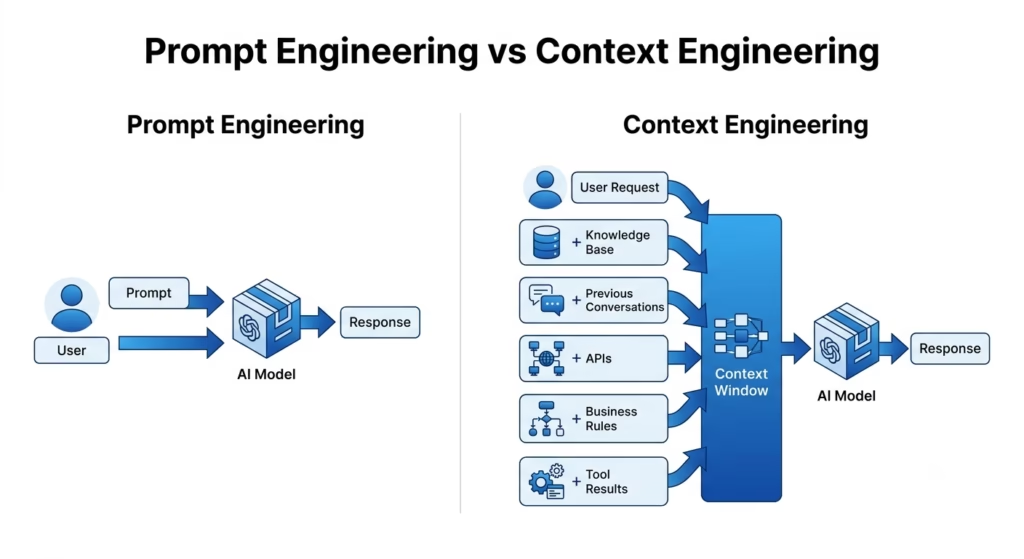
Prompt engineering focuses on crafting instructions for an AI model.
Context engineering focuses on designing everything the model sees before generating a response, including:
- System prompts
- Conversation history
- Retrieved documents
- Tool outputs
- APIs
- User preferences
- Application state
- Business rules
- Previous interactions
Prompt engineering improves questions.
Context engineering improves understanding.
As AI systems evolve into autonomous agents, context engineering is rapidly becoming more important than prompt engineering because the quality of AI decisions depends heavily on the information available to the model.
Why Should Testers Care About Context Engineering?
Many QA professionals assume AI is a developer-only topic.
That assumption is becoming dangerous.
Modern testing increasingly involves:
- AI-powered test generation
- AI copilots
- Autonomous testing agents
- Intelligent bug analysis
- Self-healing automation
- AI-driven observability
All of these systems depend on context.
A testing AI with poor context produces:
- Incorrect test cases
- False positives
- Hallucinated bugs
- Weak root-cause analysis
- Irrelevant automation scripts
A testing AI with rich context produces:
- Better defect predictions
- Higher quality test scenarios
- More accurate risk assessments
- Faster debugging assistance
- Stronger automation recommendations
The future quality engineer will not simply write prompts.
They will engineer context.
What Exactly Is Context Engineering?
Imagine hiring the smartest tester in the world.
There is only one problem.
Every morning they forget everything.
Before every task, you must brief them again.
Would you give them:
“Test the login page.”
Or would you provide:
- Requirements
- User stories
- Acceptance criteria
- Previous defects
- Browser analytics
- Security requirements
- Customer complaints
- Release notes
The second approach clearly produces better results.
Large Language Models work exactly the same way.
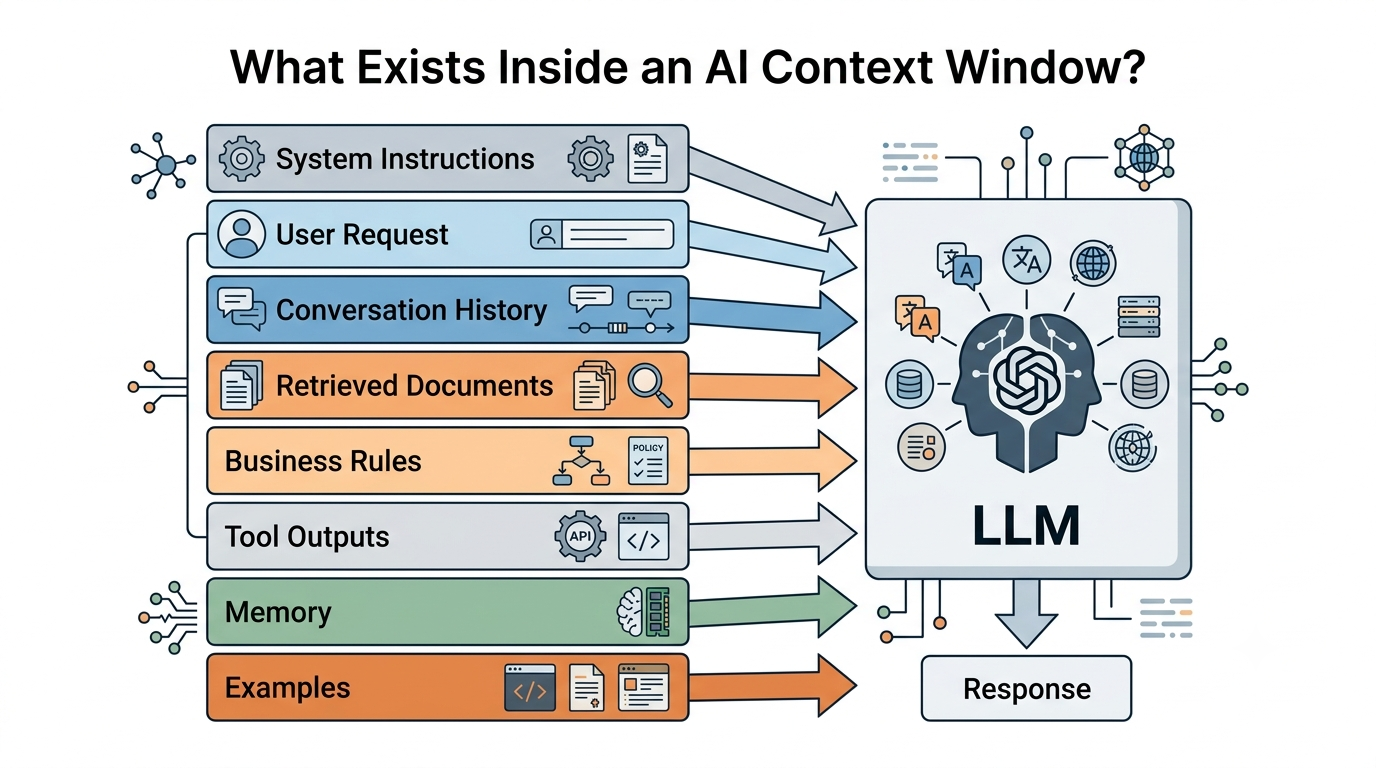
The context window acts as the briefing document.
Context engineering is the discipline of constructing that briefing.
The Evolution of AI Development
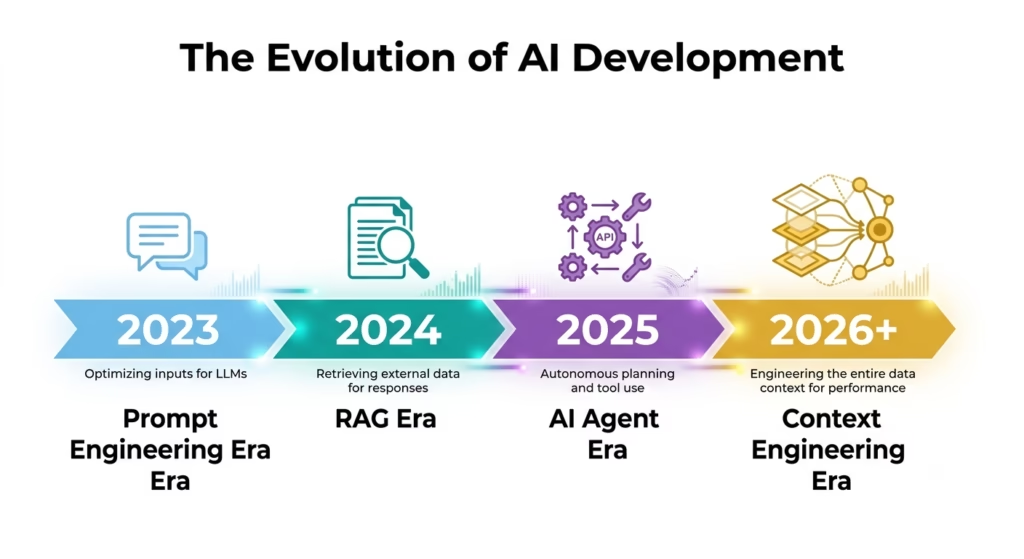
Phase 1: Prompt Engineering Era (2023–2024)
The focus was:
“How do I ask better questions?”
Examples:
- Act as a software tester
- Generate test cases
- Find edge cases
- Review automation code
This worked because applications were relatively simple.
Most interactions involved a single prompt and a single response.
Phase 2: RAG Era (2024–2025)
Teams began adding:
- Knowledge bases
- Documentation
- Vector databases
- Internal wikis
The focus shifted to:
“How do we retrieve the right information?”
Applications became more intelligent because they could access organizational knowledge.
Phase 3: Agent Era (2025–2026)
AI systems gained access to:
- Tools
- APIs
- Browsers
- Databases
- External services
Now the challenge became:
“How do we manage state across multiple decisions?”
Phase 4: Context Engineering Era (2026+)
Today the central question is:
“What information should the model receive before making a decision?”
This is where context engineering becomes the dominant discipline.
How Context Engineering Works
Modern AI systems receive far more than a user prompt.
A typical request may include:
System Instructions
Business rules and objectives.
User Request
The immediate task.
Historical Conversations
Previous interactions.
Retrieved Documents
Relevant company knowledge.
Tool Results
Outputs from APIs and databases.
Application State
Current session information.
Memory
User preferences and prior decisions.
Examples
Few-shot demonstrations.
The final response depends on all these elements combined.
Context Engineering in Software Testing
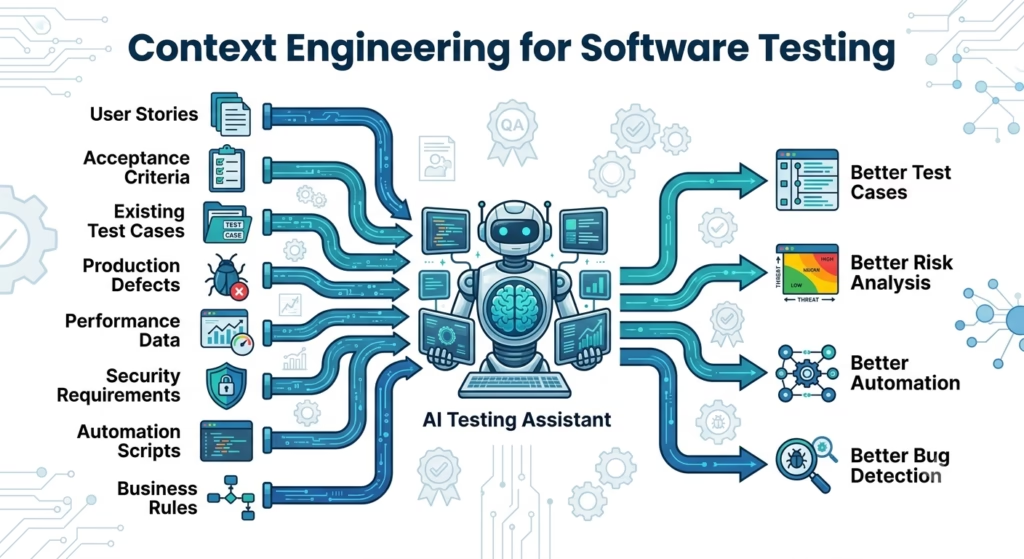
Consider a simple user request:
“Generate test cases for user registration.”
A weak AI system receives only the prompt.
Results:
- Generic test cases
- Missing business rules
- No domain awareness
A context-engineered system receives:
- User stories
- Acceptance criteria
- Existing automation coverage
- Known defects
- Security requirements
- Performance expectations
- Browser analytics
Results:
- Realistic test scenarios
- Risk-based testing
- Domain-specific edge cases
- Better coverage
The prompt remained identical.
The context changed.
The quality improved dramatically.
Why Bigger Context Windows Are Not Enough
Many people assume larger context windows automatically improve AI.
They do not.
A million-token window is useless if the wrong information fills it.
Researchers have repeatedly observed a phenomenon called:
Lost in the Middle
Models often pay greater attention to:
- Beginning of context
- End of context
Important information buried in the middle can be ignored.
This means:
More context ≠ Better context
Relevant context = Better context
Common Context Engineering Mistakes
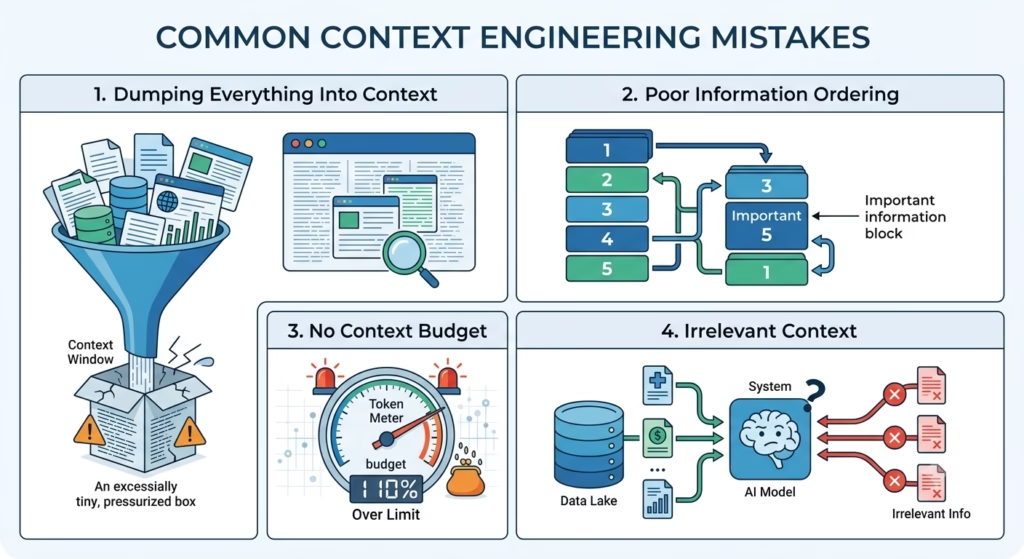
Dumping Everything
Many teams send:
- Entire documentation libraries
- Full databases
- Complete chat histories
Result:
- Increased costs
- Slower responses
- Lower accuracy
Poor Ordering
Information hierarchy matters.
Critical business rules should not be hidden in page 300 of a context payload.
No Context Budget
Every token has a cost.
Successful teams establish context budgets and prioritize information carefully.
Ignoring User Intent
Context must match the task.
A performance testing request should not receive security documentation.
Context Engineering for AI Test Automation
Future automation frameworks will likely include:
Test Repository Context
Historical tests.
Defect Context
Past bugs.
Production Monitoring Context
User behavior.
Requirements Context
Business expectations.
Execution Context
Current environment information.
When combined, AI systems can generate significantly better automation assets.
What This Means for SDETs
The role of an SDET is evolving.
Traditional responsibilities:
- Framework development
- Test automation
- CI/CD integration
Emerging responsibilities:
- AI workflow design
- Context architecture
- Retrieval pipelines
- Agent evaluation
- LLM testing
Tomorrow’s elite SDET may spend more time designing AI context pipelines than writing Selenium locators.
A Practical Context Engineering Framework
Whenever you build an AI feature, ask:
What does the model need to know?
What can be removed?
What must always be included?
What should be dynamic?
What should be cached?
What is the token budget?
How will quality be measured?
These questions often matter more than prompt wording.
Contrarian View: Prompt Engineering Is Not Dead
Some articles claim prompt engineering is over.
That is not entirely true.
Prompt engineering still matters.
However:
Prompt Engineering + Poor Context = Weak Results
Prompt Engineering + Strong Context = Strong Results
The industry is not abandoning prompts.
It is recognizing that prompts alone are insufficient.
The Future of Context Engineering
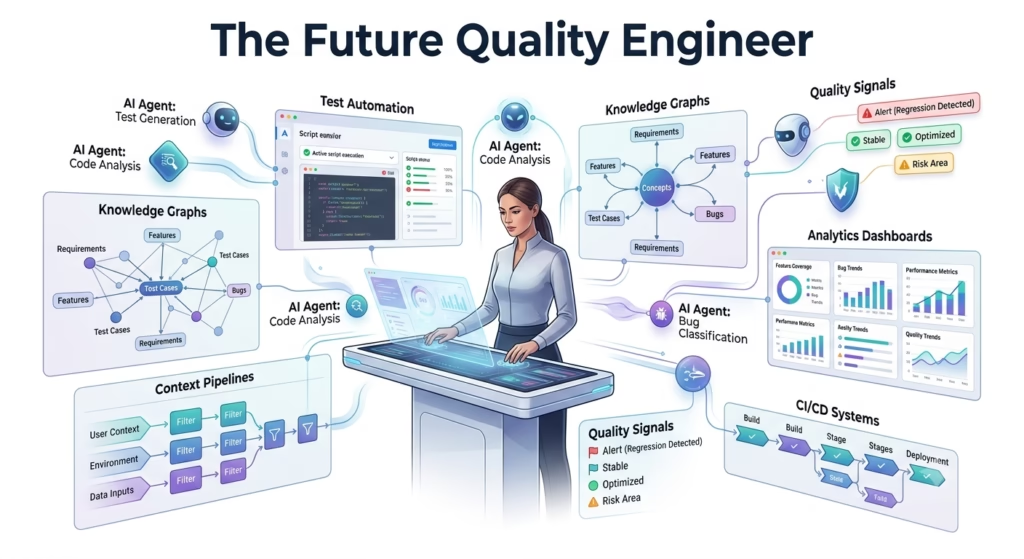
Over the next few years, expect rapid growth in:
- AI agents
- Memory systems
- RAG architectures
- Knowledge graphs
- Context optimization platforms
- AI observability tools
Organizations will compete based on the quality of context they provide to AI systems.
The companies with the best context pipelines will often outperform competitors using the exact same foundation models.
Key Takeaways
- Prompt engineering focuses on instructions.
- Context engineering focuses on information.
- AI agents depend heavily on context quality.
- Better context often beats better prompts.
- Testing teams must learn context design principles.
- Future SDETs will engineer AI workflows, not just automation frameworks.
- Context engineering is becoming a core quality engineering discipline.
Community Question
Do you believe prompt engineering will remain an important skill, or will context engineering completely replace it?
How would you use context engineering inside your current testing or automation projects?
Share your thoughts in the comments and let’s discuss where quality engineering is heading next.
Was this article helpful?

QABash Media
QABash Media publishes practical technology insights to help engineers evolve beyond testing — covering AI, DevOps, system design, and quality practices used by high-performing tech teams.
Join the QABash community
Answer challenges, earn XP, grow your testing career.
Discussion
No comments yet
Be the first to share your thoughts.